What Causes Crooked Teeth in Adults?
Crooked teeth can be a source of self-consciousness for many adults. It’s a common misconception that orthodontic treatment is only…
Tooth extraction is the removal of a tooth from its socket in the jawbone. It is usually recommended when a tooth cannot be predictably kept, or when removal is part of a wider treatment plan. The procedure may be simple or require minor surgery, depending on the tooth’s condition, roots, and position.
It’s normal to worry about pain, bleeding, recovery and how a gap will look. At Marsfield Dental Care, extractions are performed under local anaesthesia, and sedation may be available in some cases. After removal, a blood clot forms in the socket. Protecting that clot helps the gum and bone heal.
Not every extraction needs stitches, sedation or a replacement tooth. This guide covers why teeth are removed, what happens, pain, recovery, dry socket and options for the gap.
Tooth extraction is a dental procedure to remove a tooth when keeping it is no longer the best option, usually because it cannot be predictably restored. Your dentist should first check whether a filling, crown, root canal treatment or gum care could save the tooth, and explain why removal is recommended, the alternatives and what may happen if the tooth is left.
Your dentist examines the tooth, the gums, and nearby teeth, takes X-rays as needed, and reviews your medical history and medications.
A simple extraction is used for a tooth that has fully erupted and is easily accessible. After numbing the area, the dentist loosens the tooth with instruments and lifts it out. Gauze pressure then helps control bleeding.
A surgical extraction may be needed if a tooth is broken at the gumline, impacted, has curved roots or is partly covered by bone. The dentist may make a small cut in the gum, remove some bone or divide the tooth into pieces. Surgical extractions take longer, usually involve stitches and often bring more swelling and a longer recovery.
A dentist may recommend an extraction because of severe decay. This infection can’t be treated with root canal treatment, a fracture that extends below the gum, advanced gum disease, a problematic wisdom tooth, or an orthodontic plan. Symptoms such as pain or a loose tooth need assessment, but they don’t, on their own, indicate whether a tooth must come out.
When decay destroys much of a tooth or extends below the gumline, there may not be enough structure left to restore. Your dentist will first check whether root canal treatment and a crown could keep the tooth.
Infection can affect the pulp or the tissues around the root and may form an abscess. Root canal treatment may be possible. Where it isn’t, extraction may be advised. Antibiotics alone don’t remove the source of a dental infection.
Some fractures, especially those reaching below the gum or into the root, can’t be repaired predictably.
Loss of supporting bone can make teeth loose. Gum treatment is considered first, but some teeth have a poor outlook.
Impacted wisdom teeth may be removed if they cause infection, decay or other problems. Not every impacted wisdom tooth needs removal. Teeth are also sometimes removed as part of orthodontic planning, and each case needs its own justification.
| Reason | Clinical concern | Options to discuss |
| Extensive decay | Too little tooth left | Restoration, root canal or extraction |
| Pulp infection | Infection in the tooth | Root canal or extraction |
| Severe fracture | May be unrestorable | Assessment or extraction |
| Advanced gum disease | Poor support | Gum treatment or extraction |
| Problem wisdom tooth | Infection or decay | Monitoring or extraction |
| Orthodontic planning | Space or alignment | Individual planning |
You can read more about tooth extraction at our Marsfield practice.
A tooth extraction usually involves an examination and planning, local anaesthetic or another form of comfort care, careful removal of the tooth, bleeding control with gauze and written aftercare instructions. Simple extractions are often quick, while surgical extractions may involve a small gum incision, the removal of some bone, or the division of the tooth, and usually require stitches.
Your dentist reviews your symptoms, health and medicines, particularly blood thinners. Don’t stop any prescribed medicine without advice from the doctor who prescribed it. X-rays may be taken, and risks, alternatives and costs are discussed.
Extractions at our practice are done under local anaesthetic, and you are usually awake. For anxious patients or more involved cases, options can include inhaled pain relief, nitrous oxide (happy gas) or intravenous sedation, depending on your medical history. If you have intravenous sedation, you can’t drive afterwards and need someone to take you home. Discuss sedation before the day so it can be planned safely.
In a simple extraction, the tooth is loosened and lifted out. In a surgical extraction, the gum may be lifted, some bone may be removed, or the tooth may be divided before removal.
The dentist checks the socket, places a piece of gauze for you to bite on, and adds stitches if needed—then a blood clot forms. You’ll receive written aftercare instructions.
Risks include bleeding, swelling, infection, dry socket, injury to nearby teeth or nerves, and, in some cases, temporary or lasting altered sensation. Some upper back teeth sit close to the sinus, which carries its own risks. Your dentist should explain the risks associated with your tooth before you agree to treatment.
Costs depend on whether the extraction is simple or surgical, the tooth’s position and roots, imaging, sedation and any referral. Marsfield Dental Care gives a written, itemised quote after an assessment. Replacing the tooth is a separate cost, so ask for both if you are planning to do so.
Local anaesthetic is used to numb the area, so during an extraction, most people feel pressure and movement rather than sharp pain. Sharp pain is not expected, so tell your dentist straight away if you feel it. Some tenderness, swelling and stiffness during recovery are common, and surgical extractions and wisdom teeth usually take longer to settle.
The area should feel numb before removal starts. More complex teeth may need extra anaesthetic.
Expect tenderness, some bleeding or blood-stained saliva, swelling, jaw stiffness, and possibly bruising. Swelling and discomfort usually peak around day two. Our article on why swelling after an extraction happens explains more.
Talk with your dentist about your worries before the appointment. Clear explanations, an agreed signal to pause, and sedation options can help.
| Common belief | What to know |
| Extractions are always extremely painful | Anaesthetic is used, and experiences vary |
| Every extraction needs surgery | Many are straightforward |
| A painful tooth should always come out | Pain may be treatable without extraction |
| Dry socket happens after every extraction | It’s possible, not inevitable |
| Every extracted tooth must be replaced | It depends on the tooth |
Most people feel noticeably better three to four days after a tooth extraction. The gum usually closes within 1 to 2 weeks, while the bone underneath continues to heal for several months. Surgical extractions and wisdom teeth often take longer. These timeframes are a guide only, and pain that worsens after the first few days needs a dental check.
The blood clot protects the bone and nerves underneath. To protect it:
Some oozing is normal at first. Our guide to bleeding after dental work explains what’s normal and when to worry.
Tenderness and swelling should gradually ease. Clean the site gently; use rinses only as advised, and drink plenty of water. Our article on reducing soreness after a tooth extraction offers more practical tips.
The gum closes over the socket, and the bone slowly remodels. This is a good time to review replacement options with your dentist if the tooth needs to be replaced.
Dry socket, also called alveolar osteitis, happens when the blood clot in the socket fails to form or is dislodged, leaving the bone exposed. The Australian Government’s healthdirect page on dry socket describes it as a complication of tooth extraction that causes intense pain. It usually appears two to four days after an extraction, and your dentist can treat it.
Dry socket is more common after lower wisdom tooth removal, and smoking is a major risk factor. Bad taste or bad breath can also occur.
Contact your dentist if you have pain that worsens after day three, swelling that keeps getting worse, bleeding that won’t stop, a fever, or a bad taste or discharge.
Call 000 or go to your nearest emergency department if you have difficulty breathing or swallowing, fast-spreading swelling or severe bleeding you can’t control.
A missing tooth may be replaced with a dental implant, a bridge or a denture, but replacement is not always necessary. The right choice depends on which tooth was removed, your oral health, the neighbouring teeth, the bone, how you chew, your preferences and your budget. Where possible, discuss replacement options before the extraction, especially if you might want an implant later.
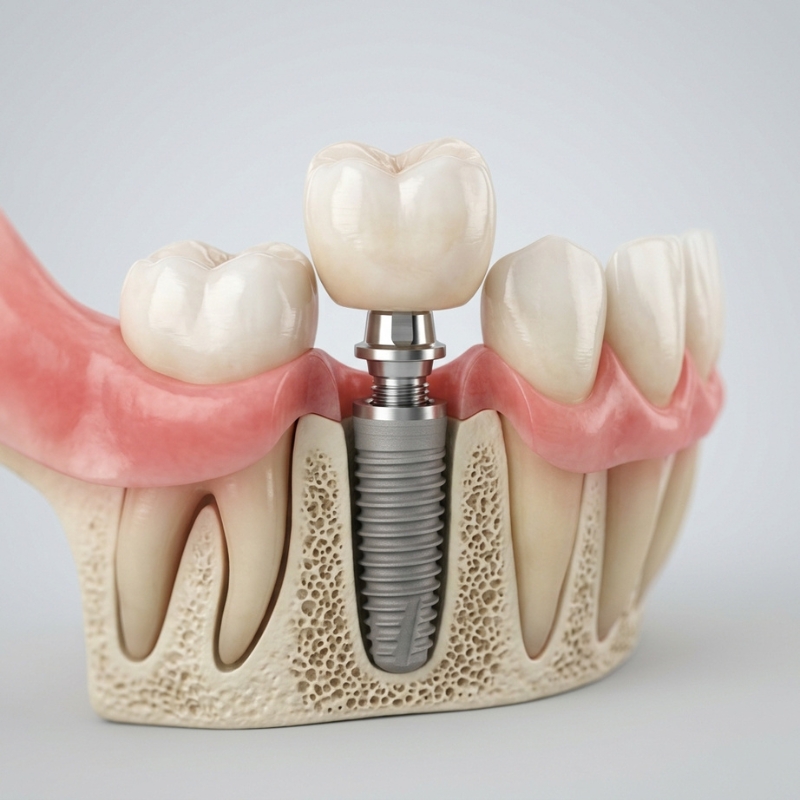
An implant is placed in the jawbone and topped with a crown, bridge or denture. It requires sufficient healthy bone and gum tissue, involves surgery, and requires ongoing care. An implant can’t always be placed straight after extraction. See our dental implant treatment page.
A bridge is a fixed replacement attached to neighbouring teeth, which may need reshaping. Adhesive bridges suit some cases. Learn more about bridges and crowns.
Partial or complete dentures can replace one or more teeth. Immediate dentures may be fitted on the day of removal and adjusted as the gums heal. See our dentures page.
Some teeth, such as many wisdom teeth, don’t need to be replaced. For others, a gap may affect appearance, chewing, nearby teeth or your bite.
| Option | Main features | Considerations |
| Dental implant | Implant-supported tooth | Surgery, bone, healing and cost |
| Bridge | Fixed, supported by other teeth | Adjacent teeth and maintenance |
| Partial denture | Removable | Fit, comfort and cleaning |
| Complete denture | Replaces a full arch | Retention and adjustments |
| No replacement | Gap remains | Function and tooth movement |
Tooth extraction is sometimes the right choice, but it should follow a clear diagnosis and a discussion of alternatives. Good aftercare protects healing, and planning for the gap early keeps more options open.
Been told a tooth may need to come out? Arrange a consultation at our Marsfield practice to understand why, what the alternatives are, what recovery involves and whether replacing the tooth makes sense. Your dentist can explain the procedure and give you a written treatment plan and quote.
[Button] Book a Dental Consultation
Many people return to desk work the next day after a simple extraction. After a surgical extraction or wisdom tooth removal, a day or two of rest is often sensible, as swelling usually peaks around day 2. Avoid heavy lifting and strenuous exercise for the first few days, and follow your dentist’s specific advice for your procedure.
Stick to soft foods for the first few days and chew on the other side. Avoid hot food and drinks while you are numb. Most people gradually return to their usual diet over about a week as tenderness settles, but crunchy, hard or very spicy foods near the socket are best left until the gum has closed.
Sometimes. An implant may be placed at the same appointment if there is enough healthy bone and no active infection, but many people need to wait for the socket to heal first, and some need a bone graft. Discussing implants before the extraction helps your dentist plan how the tooth will be removed and when an implant could be placed.
No. Many simple extractions heal well without stitches. Surgical extractions usually involve stitches to hold the gum in place while it heals. Some stitches dissolve on their own over one to two weeks, while others need to be removed at a review appointment. Your dentist will tell you which type you have.
Fold a clean piece of gauze, place it over the socket and bite down firmly for 20 to 30 minutes without checking. Sit upright and avoid rinsing or spitting. Some oozing on the first day is normal. Contact your dentist if heavy bleeding won’t stop, and call 000 for severe bleeding you can’t control.
Ideally, don’t smoke or vape at all while the socket heals. Sucking and the chemicals in smoke can dislodge the clot and slow healing, and smoking is a major risk factor for dry socket. At the very least, avoid it for as long as your dentist advises, and talk to them about support to quit if needed.