
Dental implants are a bigger investment than most dental treatments, so it’s natural to want to understand what you’re paying for before you commit. The honest answer is that the cost depends on your situation, how many teeth you’re replacing and the type of treatment, so this guide from Marsfield Dental Care in Sydney breaks it down by implant type and the factors involved. It won’t give you a fixed figure, since only a consultation and scan can do that, but it will help you understand dental implants in Sydney and what shapes the total.
| Quick answer The cost of dental implants in Sydney depends on how many teeth are being replaced and the type of treatment, whether a single implant, an implant bridge, or full-arch options like All-on-4. Extra steps such as bone grafting also affect the total. A consultation and scan give you an exact, itemised quote. |
What’s included in the cost of a dental implant?
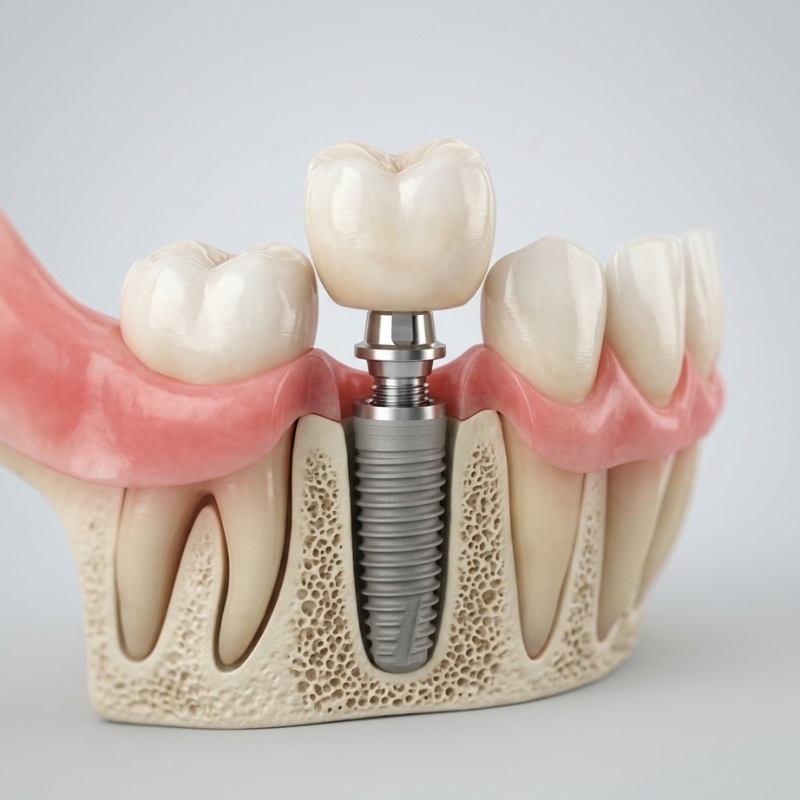
An implant isn’t a single item; it’s a small treatment with several parts, and understanding them explains where the cost goes. A complete implant generally includes the implant post itself, a titanium or ceramic screw placed into the jawbone that acts as the new tooth root; the abutment, a connector that sits on top of the post; and the crown, the visible, custom-made tooth that attaches to the abutment and is matched to your other teeth. Around those components sits the clinical work: the imaging and planning, including scans to map your bone and plan the placement precisely; the surgery to place the implant; and the follow-up appointments while the implant integrates with the bone and the final crown is fitted. Some of this happens over several months, because the implant needs time to fuse with the bone before the crown goes on. When you see an implant quote, it’s covering this whole process, not just a single part, which is why it’s more involved than a filling or a standalone crown. A good practice will itemise it so you can see exactly what’s included and where your money goes. It’s also worth understanding that the biggest single variable is simply how many teeth you’re replacing, since each additional tooth adds components and clinical time, which is why the figures for a single implant and a full arch are so different. Your dentist will also explain the timeline, because the staged nature of implant treatment usually means the cost is spread across several appointments rather than paid all at once.
Single implant vs implant bridge vs All-on-4
How many teeth you’re replacing changes the treatment, and the treatment changes the cost. There are three broad approaches, and your dentist will recommend the right one for your situation after assessing your mouth.
Single tooth implant
A single implant replaces one missing tooth with its own post, abutment and crown. It stands on its own without affecting the teeth either side, which is one of its main advantages over a traditional bridge. It suits people missing one tooth, or a few teeth in different spots, each replaced individually.
Implant-supported bridge
Where several teeth are missing in a row, an implant-supported bridge can replace them using a few implants to support a bridge of teeth, rather than one implant per tooth. This often means fewer implants than replacing each tooth individually, which can make it a practical option for a larger gap.
All-on-4 / full-arch
For someone missing most or all of their teeth in an arch, full-arch options such as All-on-4 replace a whole row of teeth on as few as four implants. It’s a way to provide a fixed, full set of teeth without needing an implant for every single tooth. Your dentist will assess whether it suits your bone and your situation. For many people who’ve struggled with loose dentures, a fixed full-arch option is a significant step up in comfort and confidence.
What can add to the cost?
Beyond the implant itself, some cases need extra steps, and these add to the total. If there isn’t enough healthy bone to hold an implant, bone grafting may be needed to build it up first, which is common when a tooth has been missing for a while. A tooth extraction may be required if the failing tooth is still in place. For implants in the upper back jaw, a sinus lift is sometimes needed to create room. And material choice plays a part: as well as standard titanium, some people choose metal-free (ceramic) implants, a metal-free, tooth-coloured alternative that can affect the cost. None of these apply to everyone, and whether you need them only becomes clear after your dentist has examined your mouth and reviewed your scans. That’s exactly why an accurate implant quote comes after a consultation, not before it, so every step your case actually needs is accounted for rather than guessed at. The upside is that these steps, where they’re needed, are what make the implant last, so they’re an investment in the result rather than an optional extra.
Are dental implants worth it vs dentures or a bridge?
Implants cost more up front than dentures or a traditional bridge, so it’s worth understanding what the extra buys you. The main advantages are longevity, function and bone health. A well-cared-for implant is a long-term replacement, often lasting many years, whereas dentures and bridges typically need replacing or adjusting more often over a lifetime. Implants function much like natural teeth, so you can eat and speak normally without worrying about a denture moving, and they don’t rely on the neighbouring teeth for support the way a traditional bridge does, which means those healthy teeth aren’t altered. Importantly, because the implant post sits in the jaw like a real root, it helps preserve the bone, which naturally shrinks away when a tooth is missing. That bone preservation helps maintain your facial structure over time. Dentures and bridges still have their place and suit many people, but for a long-term, natural-feeling replacement, many people find implants worth the greater upfront cost. When you weigh it up over years rather than at the moment of paying, the longer lifespan and the fact that implants don’t put strain on your other teeth often change how the numbers look.
Frequently asked questions
How long do dental implants last?
With good care, dental implants are designed to be a long-term solution and can last many years, often decades. Their lifespan depends on your oral hygiene, general health and regular check-ups. The crown on top may eventually need replacing, even when the implant itself remains sound. Your dentist can explain how to look after yours.
Does dental implant surgery hurt?
The procedure is done under local anaesthetic, so you shouldn’t feel pain during it, and many people are surprised how straightforward it is. Some swelling or discomfort afterwards is normal and usually managed with simple pain relief. Your dentist will talk you through what to expect and how to stay comfortable during recovery.
Are payment plans available for implants?
Payment options vary from practice to practice, so it’s best to ask directly. Many dental practices offer ways to help spread the cost of larger treatments like implants. At your consultation, you’ll receive an itemised quote and can discuss the payment options available to you. Contact Marsfield Dental Care to talk through what’s possible.
Final thoughts
The cost of dental implants comes down to how many teeth you’re replacing, the type of treatment and any extra steps your case needs, so the only accurate figure is an itemised quote after a consultation and scan. If you’re weighing up implants, the best next step is to have your situation assessed properly. Book a dental implant consultation at Marsfield Dental Care for a clear, personalised quote.
| Book a consultation Considering dental implants? Book a dental implant consultation at Marsfield Dental Care, or call 02 9887 1961 for an itemised quote. |

