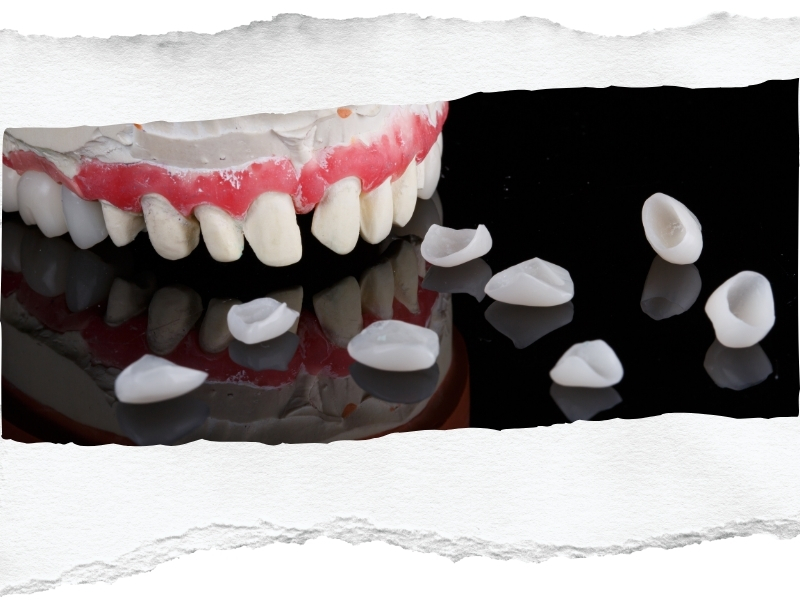
Front teeth do a lot of heavy lifting. They’re the teeth you see in photos, the ones that catch light when you talk, and the ones most likely to chip when life happens (a stray fork, a fall, a nail-biting habit you swear you don’t have) — which is why they’re often the focus of cosmetic dentistry.
When something about a front tooth bothers you, three common options often come up:
• Composite bonding
• Veneers
• Crowns
They can all improve appearance, but they’re not interchangeable. The “right” choice depends less on what looks best on Instagram and more on what your tooth can safely handle long-term.
This guide breaks down how dentists typically think about the decision for front teeth, with practical Sydney/Australian context and real-life scenarios.
Start here: what are you trying to fix?
Before comparing materials, get clear on the problem. Front-tooth concerns usually fall into one (or more) of these buckets:
• Small chip or rough edge
• Gap between teeth (especially the two front teeth)
• Uneven shape, length, or worn edges
• Stains or discolouration that don’t respond well to whitening
• Old fillings that keep staining or chipping
• A tooth that’s cracked, weakened, or had a root canal
• “One tooth darker than the rest” after trauma
The size and cause of the problem matters because it hints at whether you’re dealing with a primarily cosmetic change (surface and shape) or a structural one (strength and protection).
Q: If it’s “just cosmetic”, does that automatically mean veneers?
Not necessarily. For small shape tweaks and edge chips, bonding can be the most conservative option. Veneers are great for broader shape and colour changes, but they’re not always the simplest or best match for your situation.
The simplest comparison (without oversimplifying)
Think of the three options like this:
• Bonding: adds tooth-coloured resin to repair or reshape parts of a tooth
• Veneer: a thin “shell” (often porcelain) bonded to the front surface to change shape/colour
• Crown: a cap that covers most or all of the tooth to restore strength and form
What changes from person to person is how much tooth structure is available, how strong the tooth needs to be, and how the bite loads that tooth.
Composite bonding: best for small-to-medium fixes and repairability
Composite bonding (often just called “bonding”) uses a tooth-coloured resin shaped directly onto the tooth, then hardened and polished.
When bonding tends to suit front teeth
Bonding is often a strong choice when you want:
• Small chips repaired (especially on the edge)
• Minor reshaping (a tooth that’s a bit short or uneven)
• Closing small gaps
• Smoothing worn edges
• A conservative change with minimal removal of tooth structure
Because it’s usually applied to the existing tooth surface, bonding can preserve more natural tooth than other options, depending on the case.
Where bonding can fall short
Bonding has trade-offs you should know upfront:
• It can stain over time (especially with coffee, tea, red wine, cola, and tobacco)
• It’s more prone to chipping than porcelain in some bite situations
• It may need maintenance, polishing or patching
• Very large changes can look less “optical” than porcelain up close if the layering isn’t ideal
In Sydney, where coffee culture is practically a sport, stain management matters. If you’re having multiple coffees a day and you want the brightest, most stain-resistant finish long-term, bonding might require more upkeep.
Q: Is bonding “temporary”?
Bonding isn’t automatically temporary, but it’s generally more maintenance-friendly than “set and forget.” The practical advantage is that it’s often easier to repair: small chips can sometimes be patched without replacing everything.
Veneers: best for bigger aesthetic changes with a natural, stain-resistant finish
Veneers are thin restorations that sit on the front surface of the tooth. Many people mean porcelain veneers when they say “veneers,” though composite veneers exist, too.
When veneers tend to suit front teeth
Veneers often shine when you want:
• More noticeable shape change (wider, longer, more symmetrical front teeth)
• A whiter look that’s more stain-resistant than bonding
• A smoother, more consistent surface texture and light reflection
• To disguise mild-to-moderate discolouration that whitening won’t solve
Porcelain tends to hold gloss and resist staining well, which is one reason veneers are popular for front teeth.
The key consideration: tooth preparation
Some veneers require some enamel reduction so they fit naturally and don’t look bulky. Exactly how much depends on your tooth position, shape, and the desired outcome.
If you’ve got naturally small teeth or inward-tilted teeth, preparation may be minimal. If your teeth stick out or you want a significant colour/shape change, more preparation might be required.
Veneers and grinding (bruxism)
If you clench or grind (common with stress and sleep issues), veneers can still be an option, but the plan should account for bite forces. In many cases, the discussion shifts to:
• designing the bite carefully
• managing habits (clenching during the day)
• protecting restorations at night with a guard
Q: Do veneers “ruin your teeth”?
They don’t automatically ruin teeth, but they are a commitment. If enamel is reduced, you’ll likely need some form of restoration on that tooth long-term. A good plan is conservative where possible and considers what your tooth will need decades from now, not just the next few years.
If you’re exploring broader smile changes and want a structured way to weigh options, it can help to review cosmetic dentistry treatment options so you understand where veneers sit compared with other approaches.
Crowns: best when the tooth needs strength and protection first
Crowns are the “structural” option. While crowns can look excellent, their main job is often to protect a tooth that’s compromised.
When crowns tend to suit front teeth
A crown may be considered when:
- A front tooth is cracked or has a large fracture
• There’s a big filling already, and little natural tooth remains
• The tooth has had a root canal (often more brittle)
• There’s significant decay or previous restoration failure
• The tooth is heavily worn or weakened by bite forces
In other words, if the tooth needs reinforcement, a crown can be the safer long-term choice.
For an Australian overview of what a crown involves, appointment flow, and what it’s designed to do, this Healthdirect resource is a good reference: Dental crown procedure.
Crowns and front-tooth aesthetics
People sometimes worry a crown will look “too opaque” or artificial. Modern materials and good shade matching can look very natural, but it’s more technically demanding when you’re matching a single front tooth to neighbouring natural teeth.
Q: If it’s a front tooth, why not always do a veneer instead of a crown?
Because a veneer doesn’t wrap and reinforce a weakened tooth the way a crown can. If a front tooth has lost a lot of structure, a veneer can be like putting a new facade on a crumbling wall. It might look great, but it may not be the right foundation.
The decision framework dentists use (and you can use too)
Instead of starting with “Which one looks best?”, start with these five questions.
1) How much healthy tooth structure is left?
- Lots of natural enamel left: bonding or veneers may work well
• Large fillings, cracks, or missing structure: the crown starts to make more sense
2) Is your goal mainly shape, colour, or strength?
- Small shape fix: bonding often fits
• Bigger colour/shape change: veneers often fit
• Strength/protection: the crown often fits
3) How does your bite load the front teeth?
If you bite edge-to-edge, have a deep bite, or grind, your front teeth may take more force than average. That can influence material choice and whether protective measures are recommended.
4) How important is stain resistance and long-term gloss?
- Bonding can stain more easily and may need polishing/refreshing
• Porcelain veneers often resist staining well
• Crowns vary depending on material, but can be highly stain-resistant too
5) How do you feel about repair vs replacement?
- Bonding is often easier to patch
• Veneers may be repairable in small chips, but sometimes require replacement
• Crowns can sometimes be repaired depending on the situation/material, but replacement may be needed if damage is substantial
Common front-tooth scenarios (and what usually fits)
Below are typical “real-life” cases. These aren’t diagnoses, but they’ll help you map your situation.
Small chip on the edge from biting something hard
Often a good match:
• Bonding (quick repair, conservative, can be patched if it chips again)
Sometimes consider:
• Veneer if chips recur and you want broader shape correction
• Crown if the tooth is cracked or structurally compromised
Gap between the front teeth (small-to-moderate)
Often a good match:
• Bonding for small gaps
• Veneers if you want a bigger shape change or more uniform symmetry
Also consider:
• Orthodontics first if teeth are rotated or spacing is part of a bigger alignment issue (this can reduce how much restorative change you need)
The front tooth is darker (especially after trauma or root canal)
Often a good match:
• Veneer if the tooth is structurally sound and you’re mainly masking colour
• Crown if the tooth is weakened or heavily restored
The deciding factor is often what’s happening inside the tooth (structure, cracks, existing restorations), not just the colour.
Old front-tooth filling that keeps staining at the edges
Often a good match:
• Bonding replacement for small fillings
• Veneer if the staining is persistent and you want a larger aesthetic reset
• Crown if the filling is large and the tooth needs reinforcement
Worn, uneven front edges (especially if you clench)
Often a good match:
• Bonding for conservative edge build-ups (with habit management)
• Veneers for broader redesign (often alongside a protective night guard)
• Crown only if there’s a major structural compromise
Q: If I grind my teeth, does that rule out veneers or bonding?
Not automatically. Grinding changes the risk profile. The plan usually becomes: choose a suitable material, design the bite carefully, and protect the result. The “best” option is the one that survives your bite with the least damage to your natural tooth.
What to expect from the appointment flow (at a high level)
While every clinic differs, the typical pattern is:
Bonding
• Often completed in one visit
• Tooth is cleaned, lightly prepared if needed, resin is layered and shaped, then polished
• You leave with the finished result the same day
Veneers
• Planning (photos, shade selection, bite assessment)
• Tooth preparation if needed
• Impressions or digital scan; temporary restorations may be used
• Fitting and bonding the veneer(s)
Crowns
• Assessment of tooth health and structure
• Preparation and scan/impression
• Temporary crown
• Final crown fit and bite adjustment
If you’re trying to decide what to do with a single front tooth versus multiple teeth, it may help to think in “matching difficulty.” Matching one tooth to natural neighbours can be trickier than treating a pair (like both central incisors), because symmetry and colour blending are unforgiving in bright sunlight and phone flash.
For people who want a broader plan rather than a one-off fix, a useful next step is learning about options for improving your smile in a way that keeps the focus on suitability and long-term maintenance.
How to make any option last longer (Sydney real-life edition)
Regardless of which route you take, these habits make a genuine difference:
• Avoid biting hard objects with front teeth (ice, fingernails, pen lids, pork crackling, hard lollies)
• If you clench or grind, manage it early (stress strategies, jaw awareness, night protection if recommended)
• Rinse with water after coffee or red wine when you can
• Use a non-abrasive toothpaste if you’ve got polishing-sensitive surfaces
• Keep regular check-ups so tiny issues (like edge chips) are caught early
Q: Can I whiten veneers, bonding, or crowns later?
Whitening products change natural tooth colour, not the colour of restorations. That’s why shade planning matters. If you think you’ll want whiter teeth, whitening is often discussed before final shade selection for veneers/crowns, and bonding shade is chosen to match the final plan.
A simple “which one should I lean toward?” cheat sheet
If you want the shortest version of this guide, here’s the practical bias:
• Lean bonding when the change is small to medium, and you value conservative, repairable tweaks
• Lean veneers when you want a bigger aesthetic change and long-term stain resistance, and the tooth is structurally healthy
• Lean crown when the tooth is weakened, heavily filled, cracked, or needs protection more than it needs a surface upgrade
If you’re looking for context on where these fit within broader smile planning (without jumping into “service page mode”), you can read about cosmetic dentistry in Sydney as a general overview.
FAQ: Veneers, bonding and crowns for front teeth
Is bonding strong enough for a front tooth?
Often, yes — especially for small chips, minor reshaping, and small gaps. Strength depends on the size of the repair and your bite habits. If you bite edge-to-edge or grind, bonding may chip more easily and require maintenance.
Do veneers last longer than bonding?
In many real-world cases, porcelain veneers can hold polish and resist staining longer than bonding. Longevity still depends on bite forces, habits, and whether the tooth underneath is healthy and stable.
When is a crown better than a veneer on a front tooth?
A crown is commonly favoured when the tooth is structurally compromised — large fillings, fractures, significant wear, or after root canal treatment — because it can protect and reinforce the tooth more comprehensively.
Can bonding close a gap between front teeth?
Bonding can be great for small gaps. For larger gaps or where tooth shape needs significant redesign, veneers may deliver a more proportionate look. If alignment is part of the issue, orthodontics may be worth considering first.
What if I only want to fix one front tooth?
It’s doable, but matching colour and translucency to neighbouring natural teeth takes careful planning. Sometimes treating a pair (for symmetry) can make shade matching easier, but it depends on your teeth and goals.
Will veneers or crowns feel bulky?
They shouldn’t. Bulkiness usually happens when there isn’t enough room for the restoration or if the design doesn’t match your bite and tooth position. A good plan accounts for space, lip line, and bite contact.
What should I avoid eating after bonding or veneers?
Hard, brittle foods are the main risk for front teeth: ice, hard lollies, and biting directly into very hard crusts. Normal eating is fine, but front teeth aren’t tools.
How do dentists decide what’s “too damaged” for bonding or veneers?
They look at how much healthy tooth structure remains, whether there are cracks, the size of existing fillings, signs of decay, and how your bite loads the tooth. When strength is the priority, crowns tend to enter the conversation.